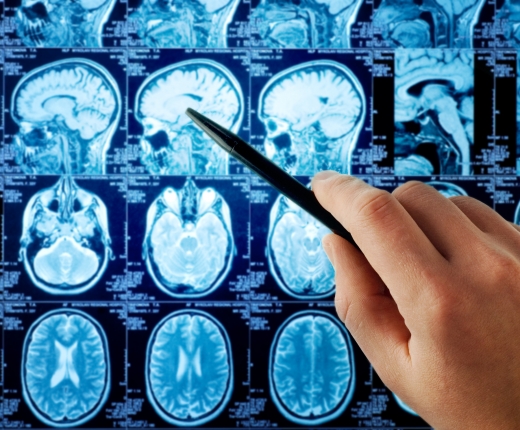
Magnetic resonance imaging, also known as MR for short, is an imaging procedure in which the structure of tissue (especially brain or spinal cord tissue) can be depicted particularly well. Strong magnetic fields are used to excite (resonate) the atomic nuclei (nuclear spin) in the tissues, which then emit different signals of their own that can be picked up and further analyzed. Modern computer technology calculates sectional images (tomography) from these signals, which can then be assessed by an expert.
The strong magnetic fields used in this process are harmless to humans compared to the more dangerous X-rays. The only danger is if patients have metal components within their body, which can cause hazards if these move or are heated.
Many neurological diagnoses also require imaging of the blood vessels. A contrast medium is then injected. This is often much better tolerated than the contrast media that are generally used. Nevertheless, in rare cases an incompatibility may occur.
Please inform the examiner in good time if you have metal components implanted in your body and, if it is planned to administer contrast medium, if you have a contrast medium allergy or kidney disease.
Diagnoses
Complaints/Symptoms