
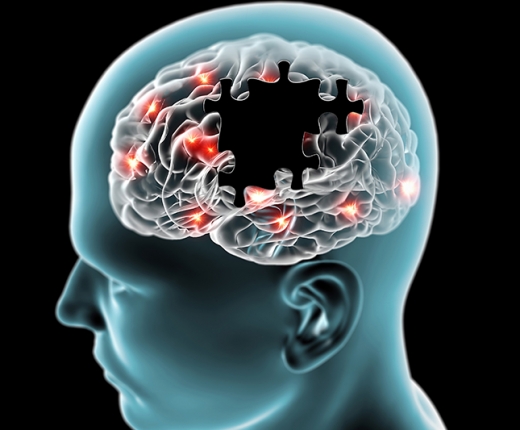
In a considerable proportion of neurological complaints, no corresponding organic disorder can be found despite multiple technical investigations. This often suggests a functional disorder of the brain. This can be imagined as a software disturbance with perfect hardware.
Symptoms are often assumed to be functional in nature if they are not typical or specific for one of the known diseases. Often they occur suddenly, go away again, fluctuate strongly in severity and frequently alternate with symptom-free conditions. Common complaints are:
1) Sensory disturbances, which do not match the known area of a nerve or nerve centre and frequently change location in the body.
2) Vertigo, which feels more like a swaying of the floor and is often associated with sudden anxiety.
3) Often there are also some symptoms known to occur in other diseases. Again, one often does not find an organic disorder despite multiple technical investigations. These can be:
- Trembling hands
- Hot or cold sensations in the hands
- Feeling of a lump in the throat
- Pressure on the chest, disturbances of the heart
- Nausea
- Sudden anxiety, panic
- Fear of losing control
- Feeling that everything is going wrong. Feeling of being “outside oneself” or “in the wrong movie”, feeling of not being able to wake up from an unpleasant “dream”.
Traditional names for clinical pictures that are diagnostically similar to functional disorders are, for example, psychogenic or psychosomatic disorders, vegetative dystonia, conversion disorder and somatoform disorder. These disorders are usually located at the boundary between neurology and psychiatry, which can often cause problems in determining which professionals should be involved.
It can be particularly difficult when organic and psychologically triggered complaints occur together at the same time (psychological overlap with organic complaints). In this case, the assessment requires a lot of experience.
Causes
The causes are mostly current or past stress factors. The mind seeks an outlet through pathological activation of specific brain areas, which then trigger the symptoms. The result is referred to as a functional disorder in the brain with no recognizable organic trigger.
Treatment options
At the beginning, it is essential that the patient learns to accept that his complaints do not have a serious organic cause. Subsequently, there are three possible treatment approaches, which are also used in parallel.
1) Increased physical activity, (including physiotherapy, ergotherapy)
2) Medication
3) Talking therapy