Symptoms
Epilepsy is essentially classified according to the type of seizures that occur. The types of epileptic seizures and many of the various symptoms associated with them can be found here: Epileptic seizure
Symptoms
Causes
Normally, stronger discharges in the brain are kept in check by the natural inhibition that is usually present in the brain, so they cannot spread abnormally. Nevertheless, even healthy people can occasionally experience an epileptic seizure (occasional seizure) without receiving the diagnosis of epilepsy. The concept of the seizure threshold, which is very high in healthy individuals, serves as an explanation here. Various provoking factors can lower the seizure threshold in any individual until an epileptic seizure occurs:
- Sleep deprivation
- Alcohol, drugs, medications
- Suddenly stopping epilepsy medications
- Flashing lights
- Hyperventilation (increased inhalation and exhalation)
- External heat, fever
- Dehydration
- Metabolic disorders (e.g., hypoglycemia, liver and kidney damage etc.)
Epilepsy patients have a very low seizure threshold from the beginning and often have both provoked seizures and repeated unprovoked seizures. Drugs used for epilepsy raise the seizure threshold. Epilepsy can have many causes (lowering the seizure threshold), for example, craniocerebral injuries, tumors, brain scarring after a stroke or cerebral hemorrhage, other circulatory and metabolic disorders of the brain, heredity or birth defects. In some cases, however, the causes of epilepsy remain unknown.
What we can offer
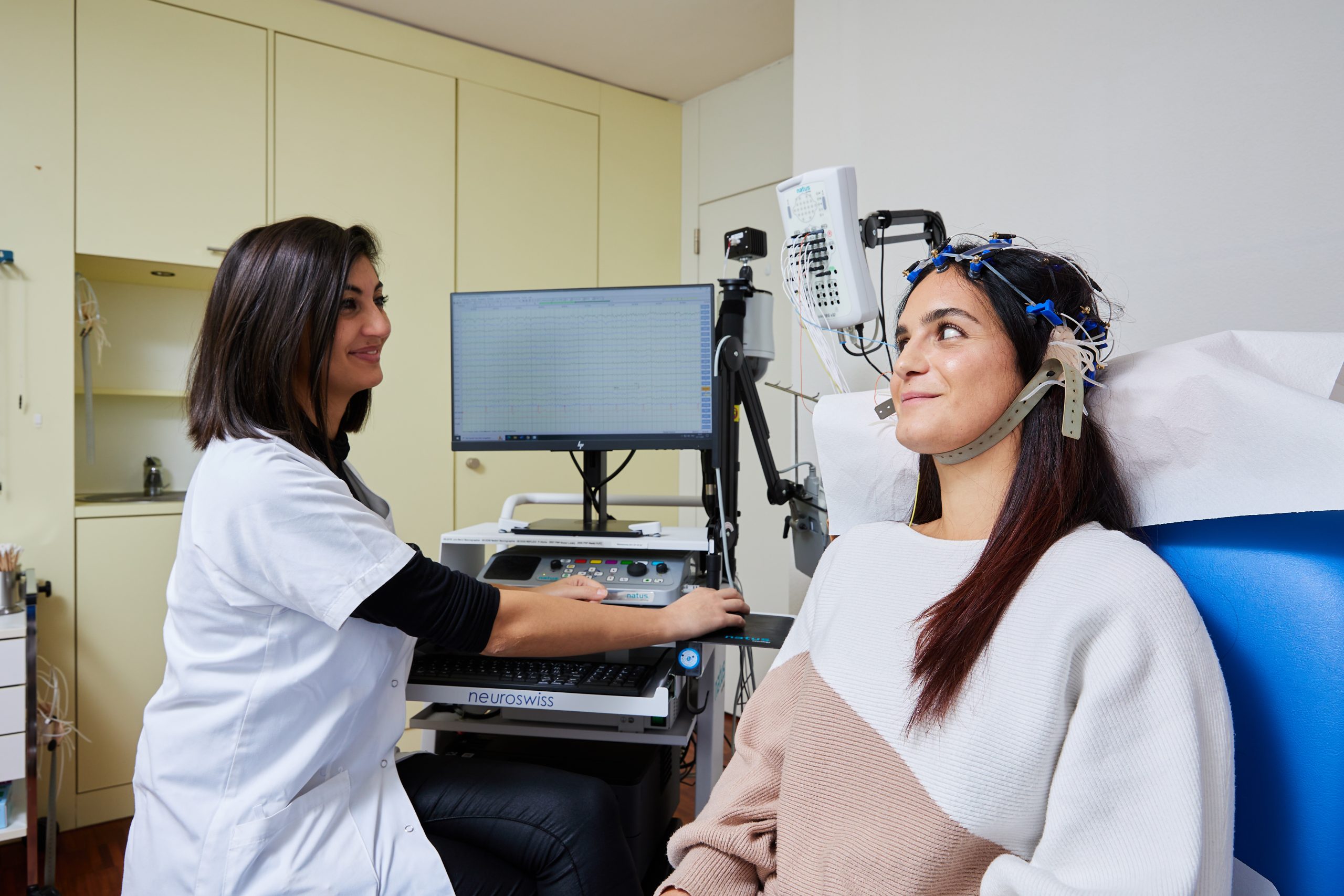
An EEG makes it possible to determine whether epilepsy is actually present and, if so, which type of epilepsy is present. However, a normal EEG does not exclude epilepsy.
Treatment/progression
Most people with epilepsy can become seizure-free and lead a completely “normal” life with targeted treatment. The most suitable medication from the group of so-called antiepileptic drugs depends on the form of the epileptic seizures and partly on your circumstances and wishes. This will all be discussed with you in a special epilepsy consultation. In any case, it is important to make certain lifestyle adjustments, for example, getting enough sleep, and avoiding situations and factors that may trigger seizures (see the text above). If a satisfactory result cannot be achieved by drug therapy, surgery may be an option for some patients. In addition to drug therapy, social-medical support is important (contacts with school, vocational guidance, driver’s license, etc.).