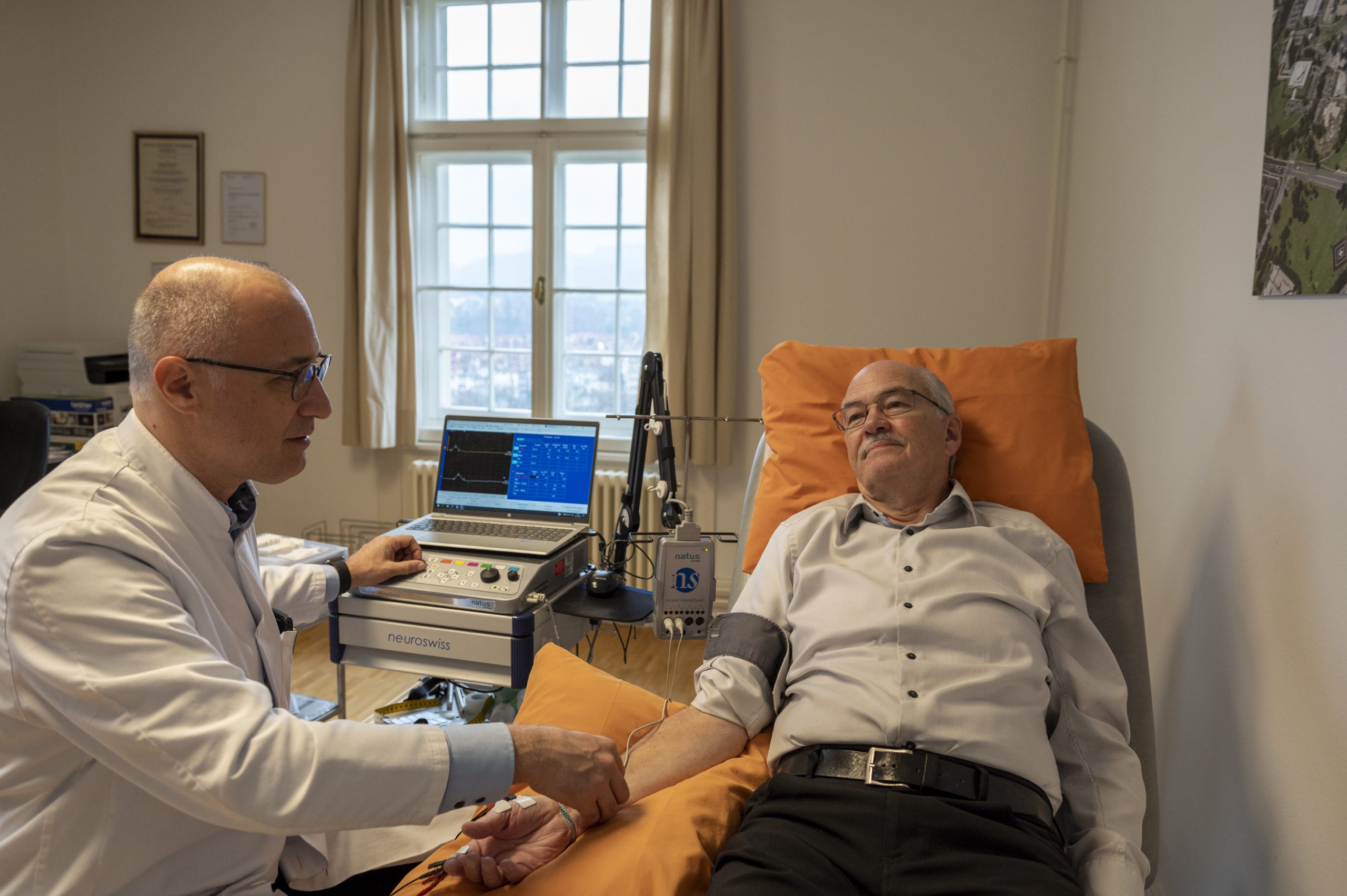
Measurement of nerve conduction using pulses conducted through adhesive electrodes on the skin surface.
This examination determines the conductivity of the nerves. When nerves in the arms or legs are electrically stimulated using a very low current, this generates an electrical potential in the nerve, and the strength and timing of this can be measured as it propagates.
Essentially two types of nerve damage can therefore be detected:
1) Weakening of the derived signal becomes weaker. Nerve fibers have died (e.g. due to alcohol or chemotherapy). The signal is weaker due to the reduced number of nerve fibers. The signal can also become weaker in muscle diseases, so in these cases an EMG examination is also carried out.
2) The signal is delayed. A normal nerve conducts the electrical impulse at a speed of about 45m/sec. This is an average value because the nerve consists of many fibers that conduct at different speeds. Slower nerve conduction usually means damage to the sheath of the nerve (myelin sheath) rather than to the nerve fibers themselves. This can be described as indicating damage to the insulation on the nerve cable. This may be congenital or acquired. The most common cause of slowed nerve conduction is diabetes when it has resulted in diabetic nerve damage (diabetic polyneuropathy).
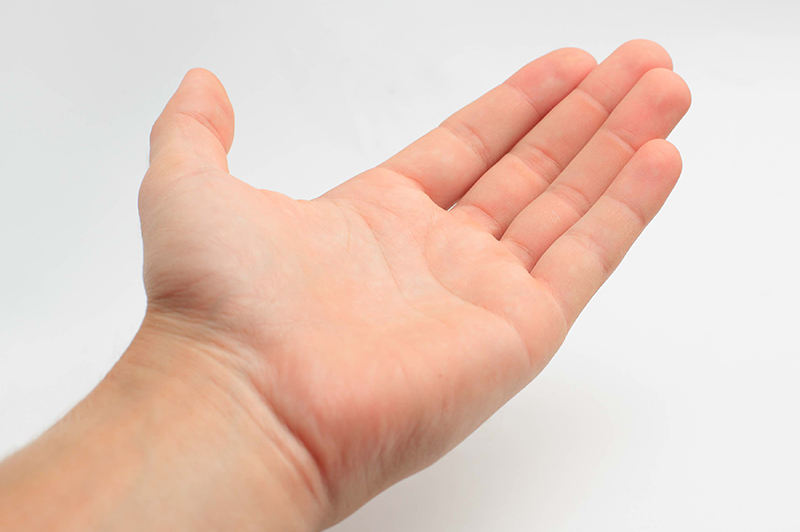
Slowing of nerve conduction can also be limited to a very short section of the nerve, for example at a site where a nerve is pinched. The most common example of this is carpal tunnel syndrome, in which a nerve (in this case, the median nerve) is pinched at the wrist, which can cause the fingers to go numb or the hand muscles to become weak. The examination is usually performed quickly and most people do not find it uncomfortable. People who are very sensitive to electricity are more likely to feel uncomfortable; it is rare for the examination to have to be discontinued because the electrical stimulus is perceived as too unpleasant.