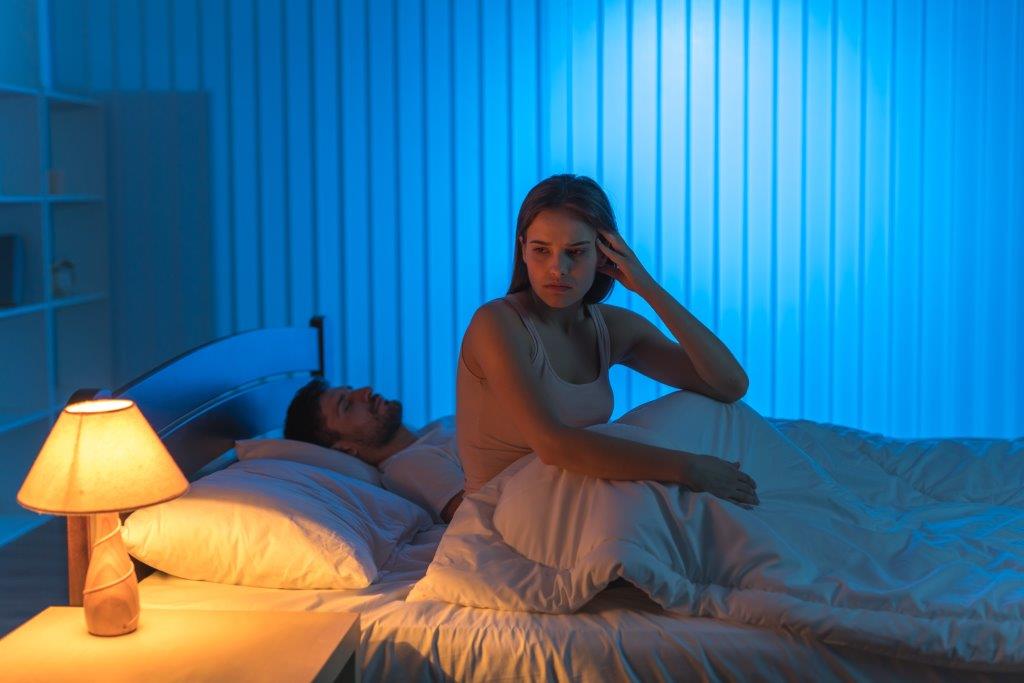
SYMPTOMS
Insomnia can involve difficulty falling asleep, problems sleeping through the night and early waking. When sufferers lie awake in bed for hours on end, they start to chase their thoughts, which is also described as a “thought carousel”. Patients are very worried that they will not be able to work the next day, which in reality is usually not true. Severe sleep disturbances limit the quality of life, and daytime fatigue can lead to concentration problems and an increased risk of accidents.
Causes
Healthy people need different amounts of sleep. In old age, the necessary amount of sleep often becomes shorter. For example, if you need only 6 hours of sleep due to your age and still go to bed at 10 p.m. as usual, you may not be able to fall asleep for a long time or lie awake in bed in the middle of the night. A reduction in daily activities (e.g. retirement), lack of exercise and a regular nap can also reduce sleep pressure.
A common form of insomnia is learned insomnia, which is, so to speak, a dumb habit acquired a long time ago for an understandable reason (having a baby, exam stress, etc.) and can’t get rid of, even though the cause is long gone. One of the most common organic causes is restless legs syndrome, and sleep apnea syndrome – especially in women – can also lead to insomnia.
The most common disease-related cause of insomnia is depression or anxiety disorder, which typically lead to early waking. However, ordinary stressful situations (e.g. an exam), or the consumption of nicotine, alcohol, caffeine and various medications can lead to insomnia. Many neurological diseases are accompanied by sleep-wake disturbances and lead to an additional restriction of the quality of life.
During puberty, a sleep-wake rhythm disorder often occurs because the internal clock is shifted backwards for biological and social reasons, making it impossible to fall asleep at a socially acceptable earlier time and also leading to difficulties awakening. However, during the holidays when the sleep pattern is not constrained, these people have no sleep problems. In old age, the opposite happens. Elderly people go to bed very early because they no longer have anything to do, and they get up very early, which is called senile early waking. A similar cause of this insomnia is caused by shift work or jet lag.
What we can offer




Treatment/progression
In the treatment of learned insomnia, cognitive behavioral therapy for insomnia (KVT-I) is by far the leading treatment. In the sleep-wake consultation, patients learn the most important measures involved in sleep hygiene and are also signposted to long-term behavioral therapy. Medications such as sleep-inhibiting antidepressants should only be prescribed as an adjunct to KVT-I, and benzodiazepines are not used for the chronic form, but only for forms of insomnia with a short duration (e.g. before an exam). Sleep apnea syndrome, restless legs syndrome, and psychiatric or neurological causes of insomnia require specific therapy. Sleep-wake rhythm disorders are also treated with behavioral therapy, possibly with a combination of melatonin in the evening and light therapy in the morning.