Symptoms
The boundary between sleep-related movement disorders and behavioral disorders during sleep (parasomnias) is blurred. Sleep-related movement disorders tend to be simple twitches or convulsions, while behavioral sleep disorders are characterized by complex movements.
Twitching while falling asleep
Harmless one-time twitching of the whole body
Exploding Head Syndrome
Hearing a loud bang with a strong feeling of pressure in the head
Stereotypical movements while falling asleep
Rhythmic movements of the trunk (rocking), the head (head banging) or the feet (foot tremor), which can be stopped arbitrarily at any time.
Teeth grinding
(Bruxism)
More or less audible grinding noise of the grinding teeth, which not infrequently can lead to tooth damage.
Periodic leg movements during sleep (PLMS)
Recurrent movements of the feet or even legs at regular intervals of 20-40 seconds, which can lead to unnoticed waking reactions and disturb sleep.
Neck myoclonus
Abrupt severe twitching of the neck muscles or jaw muscles, which can rarely cause tongue biting or lead to neck discomfort.
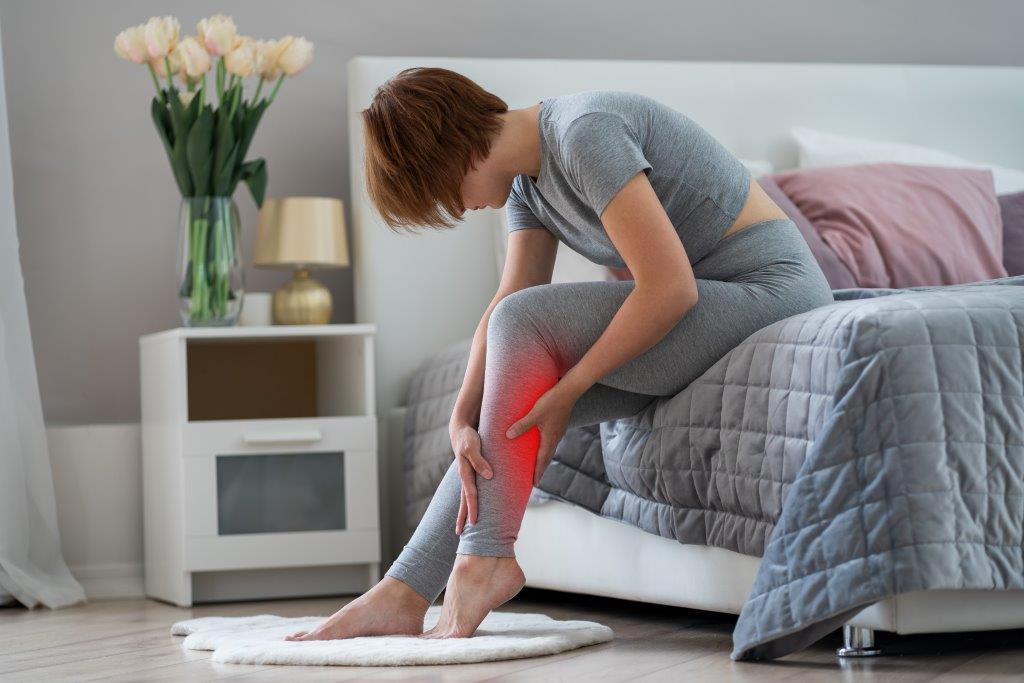
Muscle cramps
Infrequent muscle cramps, mainly in the calf muscles, are experienced by many healthy individuals. Where there are very frequent and painful muscle cramps, however, these can become pathological, requiring a more detailed review and targeted therapy.
Causes
Most movement disorders during sleep are normal phenomena, which occur sporadically in healthy persons (sometimes familial). Here, the primary goal is to diagnose the harmless nature of the phenomena so that the patient can be reassured.
In the case of twitching, which can even lead to tongue biting, epileptic seizures must be ruled out. Severe teeth grinding can lead to tooth damage, so it is necessary to discuss with a dentist how to prevent this. Periodic leg movements (PLMS) are a typical feature of restless legs syndrome, which must be clarified in detail with a sleep physician.
In case of severe and frequent muscle cramps, an internal medical (electrolyte disorder) or neurological cause (muscle disease, polyneuropathy, Parkinson’s disease) must be excluded. Sometimes differentiation from restless legs syndrome is not easy, e.g. if both diseases occur in the same patient.
What we can offer


Treatment/progression
If an internal or neurological cause is detected, the aim is to remedy this first. Often, however, no clear cause is found for the symptoms.
If it is postulated that PLMS is present but not restless legs syndrome, which leads to either sleep disturbance or fatigue during the day, treatment with pregabalin or gabapentin (dopamine agonists) in a low dosage can be tried, and the syndrome being targeted, i.e. the fatigue or sleep disturbance, must be carefully checked. Administration of drugs without careful consideration should be avoided due to possible side effects (e.g., augmentation).
Frequent and painful muscle spasms during sleep require specialist evaluation and targeted treatment. However, relatively few drug studies exist. Magnesium is frequently used and although no clear effects have been scientifically proven, it has hardly any side effects so a trial of this treatment is worthwhile. In certain patients, a positive effect can be achieved with gabapentin. Regular muscle stretching of the affected muscles in the evening before going to bed has a scientifically proven effect.
No therapeutic studies exist for the various forms of twitching in the neck or chin muscles. If it is postulated that neck discomfort, tension of the jaw muscles or tooth damage are becoming pathological, treatment with relaxing medications can be attempted (beta blockers, Rivotril, Pregabalin).