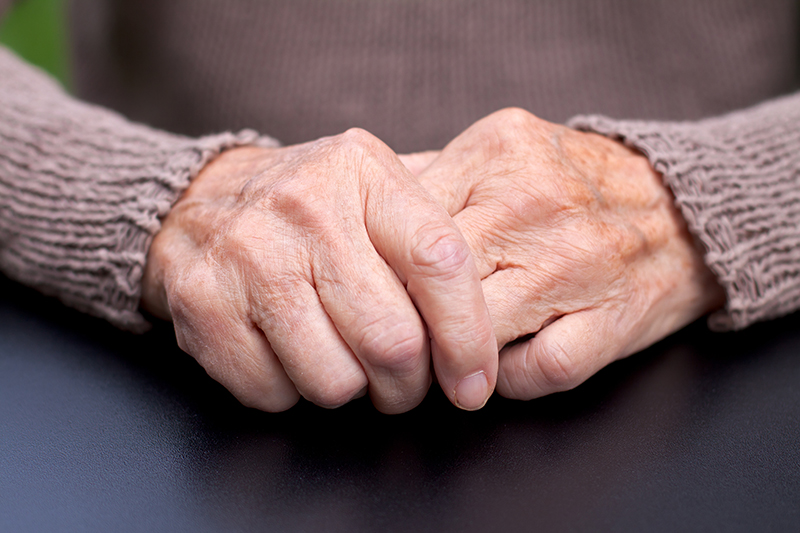
Tremor is essentially an unconscious or involuntary motor action in which the whole body or individual body parts tremble or vibrate slightly, jitter or shake. Minimal tremor in the hands is normal (physiological tremor) and is probably related to the mechanics of the arms and mechanical conduction of the heartbeat. This physiological tremor is only noticed when it is intensified by various influences and then exceeds the perception threshold (tremor in cold weather, excessive consumption of alcohol, nicotine, drugs, coffee, tea and various medications). Shaking often affects the hands, head and face, while the legs and voice are affected less frequently. Tremor can occur both at rest (more common in Parkinson’s disease) or in action (more common in essential tremor). One can further differentiate the following forms of tremor:
- Tremor at rest
- Tremor when stopping or moving a body part
- Tremor during fixation on a target
- Tremor when holding an object
- Trembling during specific motor actions, e.g. playing music
Causes
Tremor can also be a symptom of disease. Common causes are essential tremor, Parkinson’s disease, but more rarely hyperthyroidism, epilepsy, stroke and multiple sclerosis can cause tremor. Psychological conditions such as anxiety disorders or panic attacks are also possible causes.